
Why AI Should Be Built Around Real Business Processes
All Industries22 June 2026
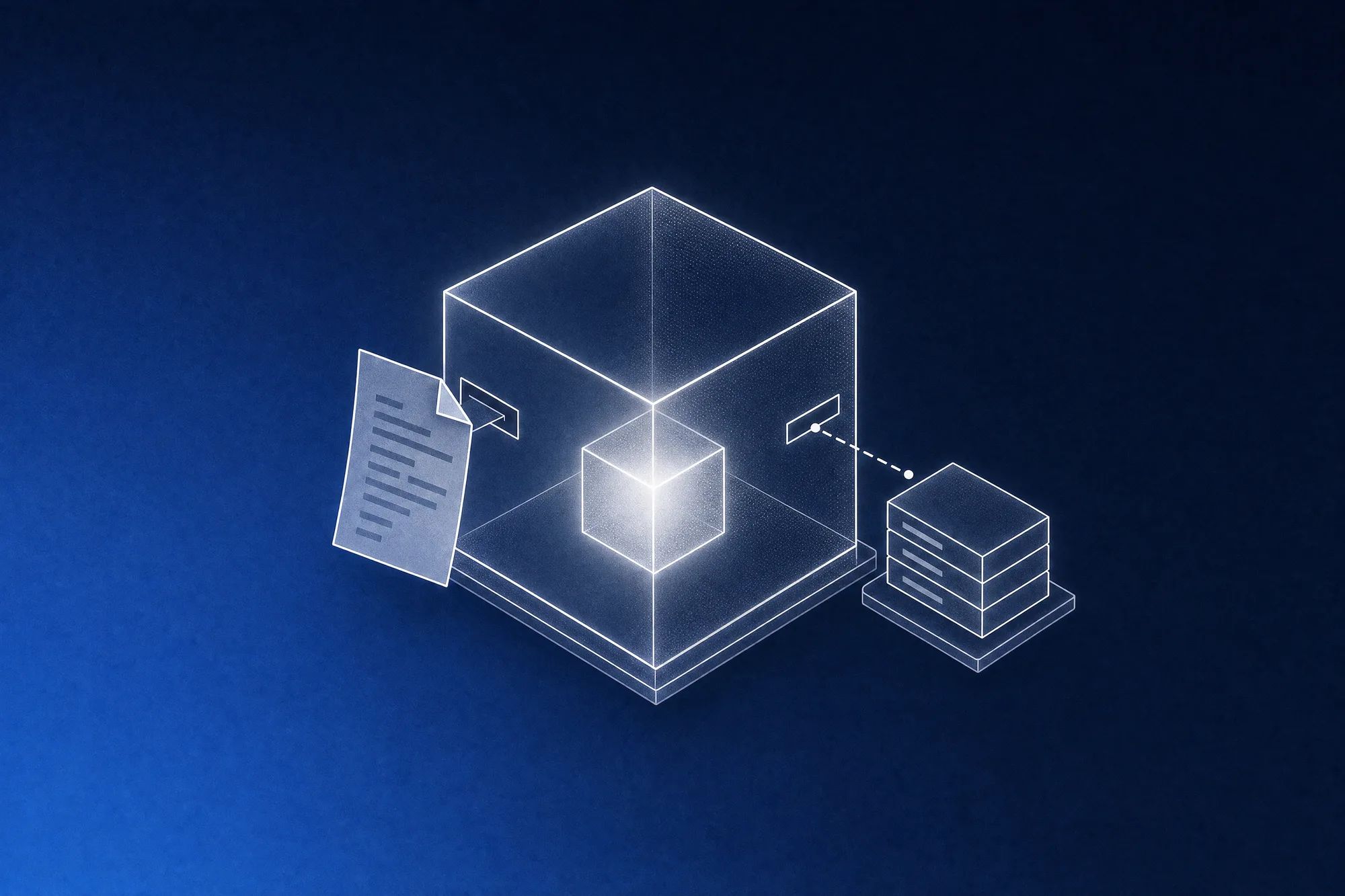
It is Friday afternoon at a distributor's office. Three customer POs land almost at once: a clean PDF by email, a slightly crooked scan, and a photo of a paper PO snapped on a phone and sent over WhatsApp. Your admin opens each one, retypes the item codes, quantities, and prices into the system, then checks every line again for fear of a mistake. Meanwhile, on that same WhatsApp thread, the customer is already asking: when will my order be processed?
That work can now be handed to an AI purchase order system: software that reads customer POs in PDF, scan, or photo form, extracts every line item, and assembles them into an order that is ready for review. Global benchmarks show manual order processing takes a median of about 11 minutes per order, AI-driven automation brings that down to around 3 minutes, and top performers finish in under 1 minute (Source: Esker, 2025). That is the real shift behind hours to minutes.
The cost of manual entry rarely shows up in your financial reports because it is spread across many desks. A Conexiom study estimates that customer-service and sales staff spend 20-40% of their working hours just handling orders manually (Source: Conexiom, 2025). The error rate is not zero either: studies put manual order-entry mistakes anywhere from 1-3% (Source: APQC via Conexiom, 2025) to around 9%, compared with under 1% once the process is automated (Source: Esker, 2025). Every wrong line means the wrong goods shipped, a return, and a disappointed customer.
The scale is serious money too. As an illustration from the US market: a business handling 1,500 orders a month at an average of 12 minutes per order needs the equivalent of 3.75 full-time employees just to retype orders, roughly US$225,000 a year at US wage assumptions (Source: Conexiom, 2025). Indonesian wages are obviously different, but the logic holds: the more POs you receive, the more working hours vanish into work that adds no value. And this touches a very large sector, because wholesale and retail trade contributed 13.17% of Indonesia's GDP in 2025, second only to manufacturing (Source: BPS, 2026).
From a project we built ourselves, Olaif Purchase, a B2B ordering portal for a wholesale business, we saw up close what a distributor's order flow looks like before automation: six separate manual steps between receiving a PO and having the order fully recorded and paid. The portal collapses those six steps into a single checkout.
Using it is simple: the customer uploads a PO, then Claude AI reads it, extracts every item, and matches each one to the catalog. The underlying technology is built to process PDF documents containing both text and tables (Source: Anthropic documentation, 2026). Prices appear automatically according to each customer's agreement, whether a flat discount, special per-product prices, or tiered pricing, with no spreadsheet in sight. Payment runs on QRIS or Virtual Account through Xendit, including credit purchases against approved limits. The moment an order is paid, the Sales Order, Invoice, and Payment sync to Zoho Books in one pass, then courier rates are compared automatically and can be booked in one click. Customers can even download their own tax invoices from the dashboard.
One thing worth stating clearly: the AI here assists, it does not take over. The extracted PO appears as a cart the buyer still reviews before checkout, while pricing, credit limits, and approvals remain rules you control completely. The minutes-per-order figures in this article are industry benchmarks, not measured results from a single project. Olaif is shown as a real client with permission; all customer names, order numbers, amounts, addresses, and other data in these examples are fictional samples for illustration only.
Compare two sides of your own business. On the retail side, your Shopee or Tokopedia store already has a polished automated checkout. On the wholesale side, which is often worth more, orders still travel through retyped POs, WhatsApp threads, and manual transfer reconciliation. Yet the supporting infrastructure has matured: QRIS reached 59.53 million users and 42.75 million merchants by the end of 2025, with transaction volume growing 139.99% in a year (Source: Bank Indonesia, Economic Report on Indonesia 2025). Payments are no longer the bottleneck; the way orders come in is what lags behind.
Companies that automate order processing reach an average of 67% touchless orders, meaning orders processed without human intervention, and the best exceed 90% (Source: Esker, 2025). For your business, that does not mean cutting people; it means admin hours shift from retyping to handling exceptions, collecting payments, and serving customers. There is also a side rarely discussed: customer POs carry personal data such as names, addresses, and phone numbers, and processing them through a controlled system is far more disciplined than keeping them in an admin's personal WhatsApp gallery.
If you would like to see what AI that reads customer POs could look like for your own order flow, tell us about the process through our contact page. The Agentiq team will reply with concrete recommendations based on your process, not a template.
Tell us what you need, and we will help turn it into a real application.
