
From Hours to Minutes: AI That Reads Customer POs Automatically
Retail & Distribution31 August 2026
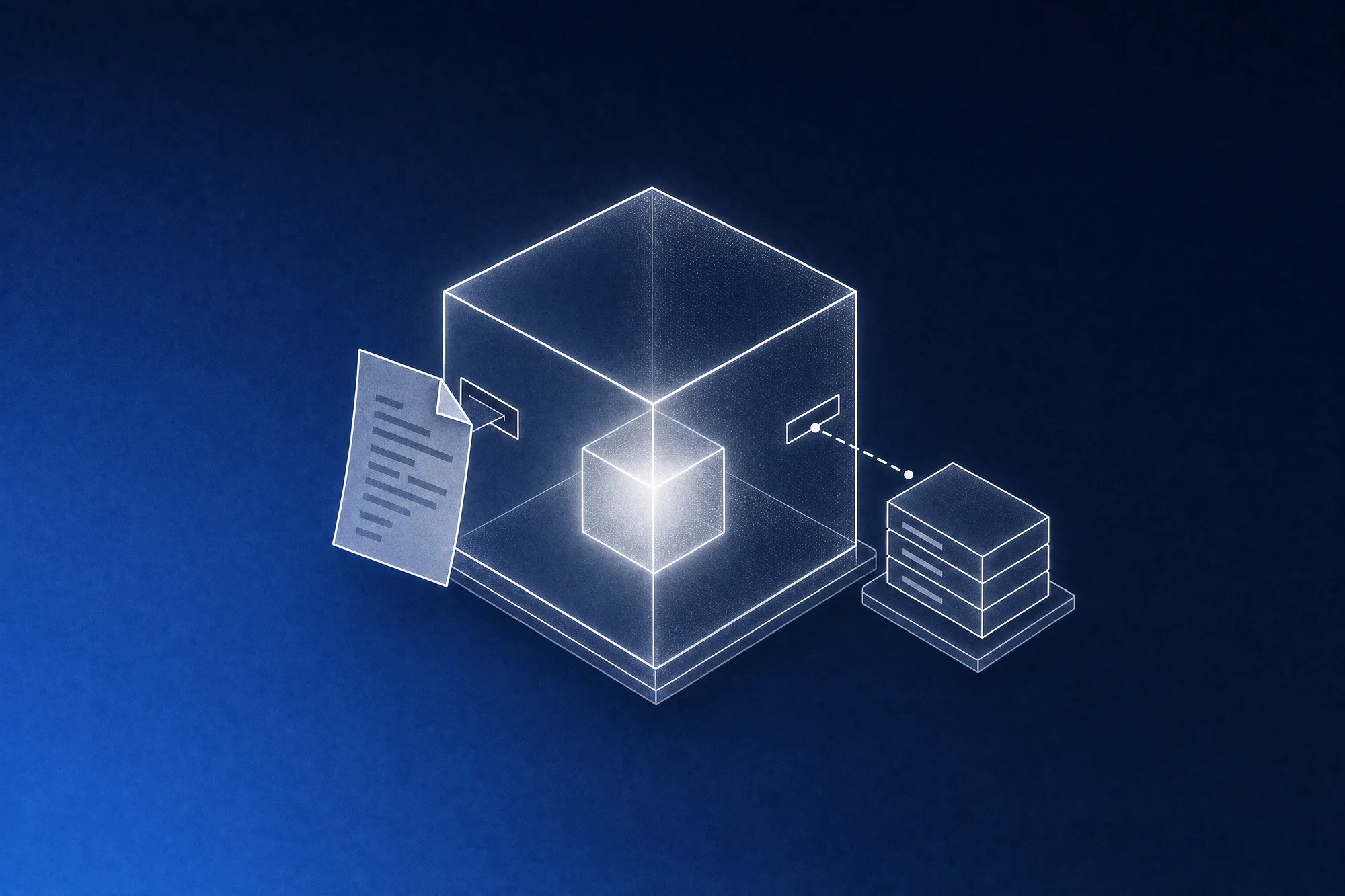
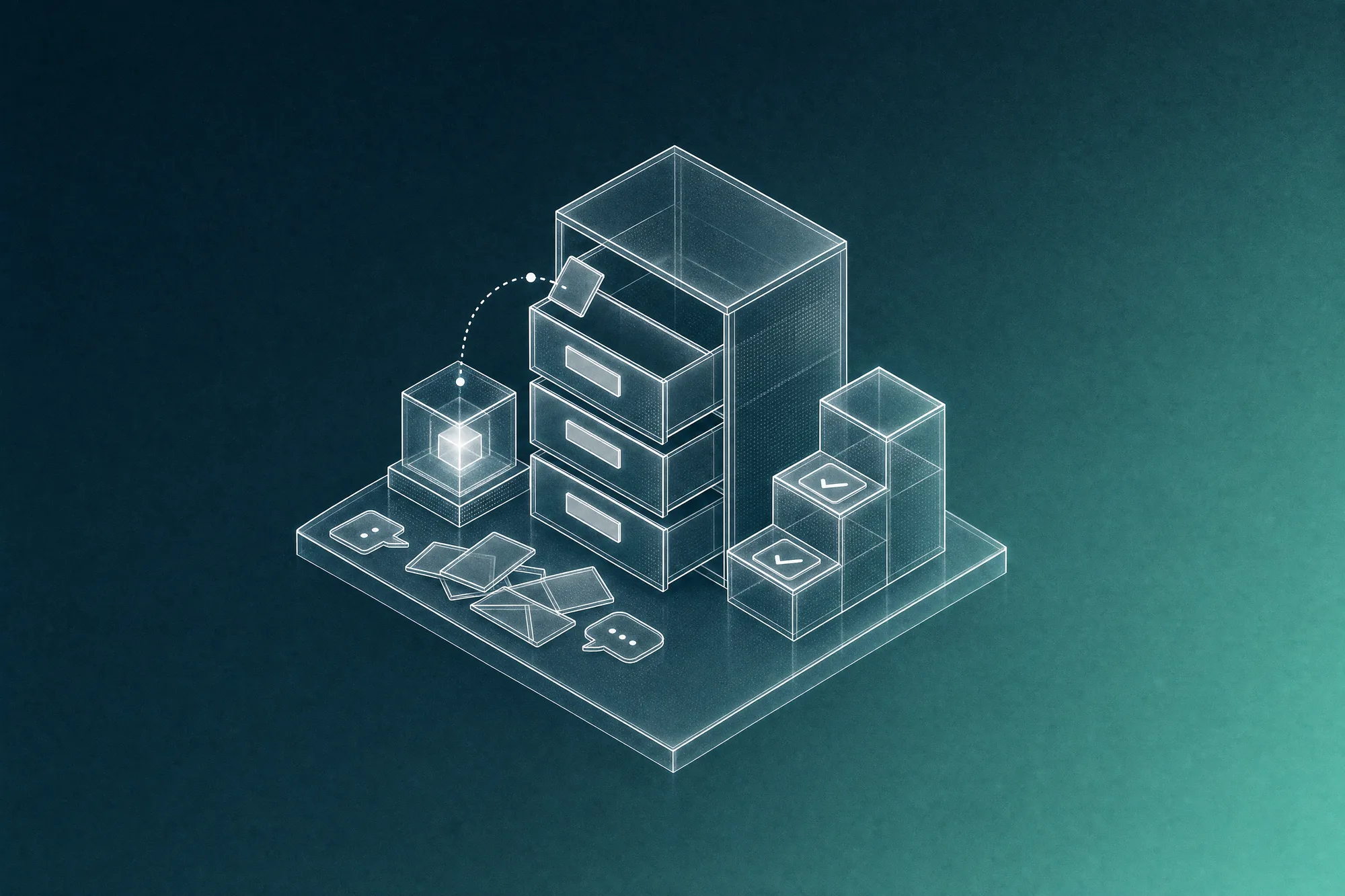
Thursday afternoon, two days before the second stage-payment claim is due. The project admin is scrolling through weeks of a WhatsApp group, hunting for the second-floor slab-pour photo the supervisor asked for. The photo is there. It's just buried between the foreman's voice notes, revised drawings and a “boss, cement's out, 40 bags” message that never became a purchase order.
In another folder, last year's retention still hasn't been claimed, because nobody sent a reminder.
AI for contractors earns its keep on paper trails like this, not on site robots or 3D models. It can read photos and messages in a project group, match material requests against purchase orders and the cost estimate (RAB), draft progress reports and flag stage payments and retention as they fall due. Quantities, unit prices and the approval of every invoice stay with your people.
Construction is busy. In Q1 2026 the sector grew 5.49% year on year and made up 9.81% of GDP, driven by both government and private activity (Source: BPS, 2026). Busy is not the same as profitable. Gapensi, the contractors' association, puts average project margins at 10–15%, a cushion that can vanish or turn negative when material prices rise (Source: Kontan, 2026).
A weaker rupiah squeezes cash flow too, especially on projects using imported steel and mechanical and electrical materials. One of Gapensi's suggestions is to negotiate tighter stage-payment schedules with project owners (Source: Kontan, 2026). But a tighter schedule only helps if the billing paperwork is ready sooner. Project admin then stops being back-office work and becomes a cash question.
Late payment is a regional risk too. An Atradius survey of 2,145 suppliers in eight Asian markets, Indonesia included, found more than 80% were hit by rising payment delays, and named construction a higher-risk sector because of its long payment cycles (Source: Atradius, 2026).
AI adoption is still shallow. Of 1,883 construction respondents in a RICS survey, about two-thirds use AI somewhere in their work, but only 19% use it routinely in specific processes and fewer than 1% have integrated it across the organisation (Source: RICS, 2026). A year earlier, the most-cited barriers included difficulty connecting AI to existing systems (37%) and poor data quality (30%) (Source: RICS, 2025). For an Indonesian contractor, those “existing systems” are often a WhatsApp group and a few Excel files.
The honest answer: follow one project's paper trail, from cost estimate to returned retention, and see where help fits at each step.
That last step is often underrated. On government projects, every stage payment is reduced by the down-payment instalment, retention and any penalty; the 5% retention serves as the maintenance guarantee and is returned 14 working days after the maintenance period ends (Source: Hukumonline, 2025). Private contracts set their own terms, though many follow a similar pattern. For a firm running ten projects, unclaimed retention and stage payments stuck behind an unsigned progress certificate are idle money.
The principle is simple: don't ask the foreman to open a new app. Site teams already work from their phones, in a country of around 230 million internet users, or 80.5% of the population (Source: DataReportal, 2025). What has to change is what happens to a message once it's sent.
Replay that Thursday afternoon. The pour photo the foreman sent is already filed under the second-floor slab item, date included. At measurement, the admin opens the item list and sees a suggested progress percentage beside its photos; the site manager corrects any figure that looks wrong. The draft progress certificate is already assembled, so the team's time goes on checking, not searching.
In our experience, site habits almost never change because of a contractor app that sits outside WhatsApp. The systems that last are the ones built on top of those habits.
Quite a lot, and rightly so. The estimator or quantity surveyor still signs off quantities and unit prices. Progress percentages are still agreed with the project owner's supervisor. Finance or the company's owner still approves every invoice, and client negotiation stays entirely human. AI prepares drafts and flags anomalies; you stay in control.
Data matters too. Site photos show workers' faces, and worker lists carry national ID numbers and BPJS social-security details, so they count as personal data under Indonesia's Personal Data Protection Law (UU 27/2022), in force since October 2024. In the RICS survey, privacy and security as a barrier to AI adoption rose from 22% to 30% (Source: RICS, 2026). Decide early where the data is stored and who may see which project.
Ready-made contractor software is plentiful, and for standard budget and progress monitoring it makes sense. It fits when your workflow roughly matches the one its vendor designed. If your stage payments work differently in every contract, material requests arrive on WhatsApp and project owners want reports in their own format, you will keep patching gaps outside the platform.
In that situation, a custom app built around how your firm works usually lasts longer. In Cadence, the project-planning app we built for a growing organisation, a task is recorded once and appears in List, Board and Gantt views, with overdue work marked in red and each person's workload visible by day. A tracking layer like this could underpin a Gantt chart per project and a workload view across site teams; cost estimates, stage payments and retention would be new modules Cadence does not have. Case study built by Agentiq for a confidential client; all data shown is fictional and for demonstration only.
What this means for your business: the first question isn't which app has the most features but where your project money sits longest. Start there.
If you'd like to see what a clean project paper trail looks like for your construction firm, tell us about the workflow on our contact page — the Agentiq team will reply with concrete recommendations, not a template.
Tell us what you need, and we will help turn it into a real application.