
AI News for Business Owners: WhatsApp Replies Get Billed From 1 October
All Industries5 September 2026
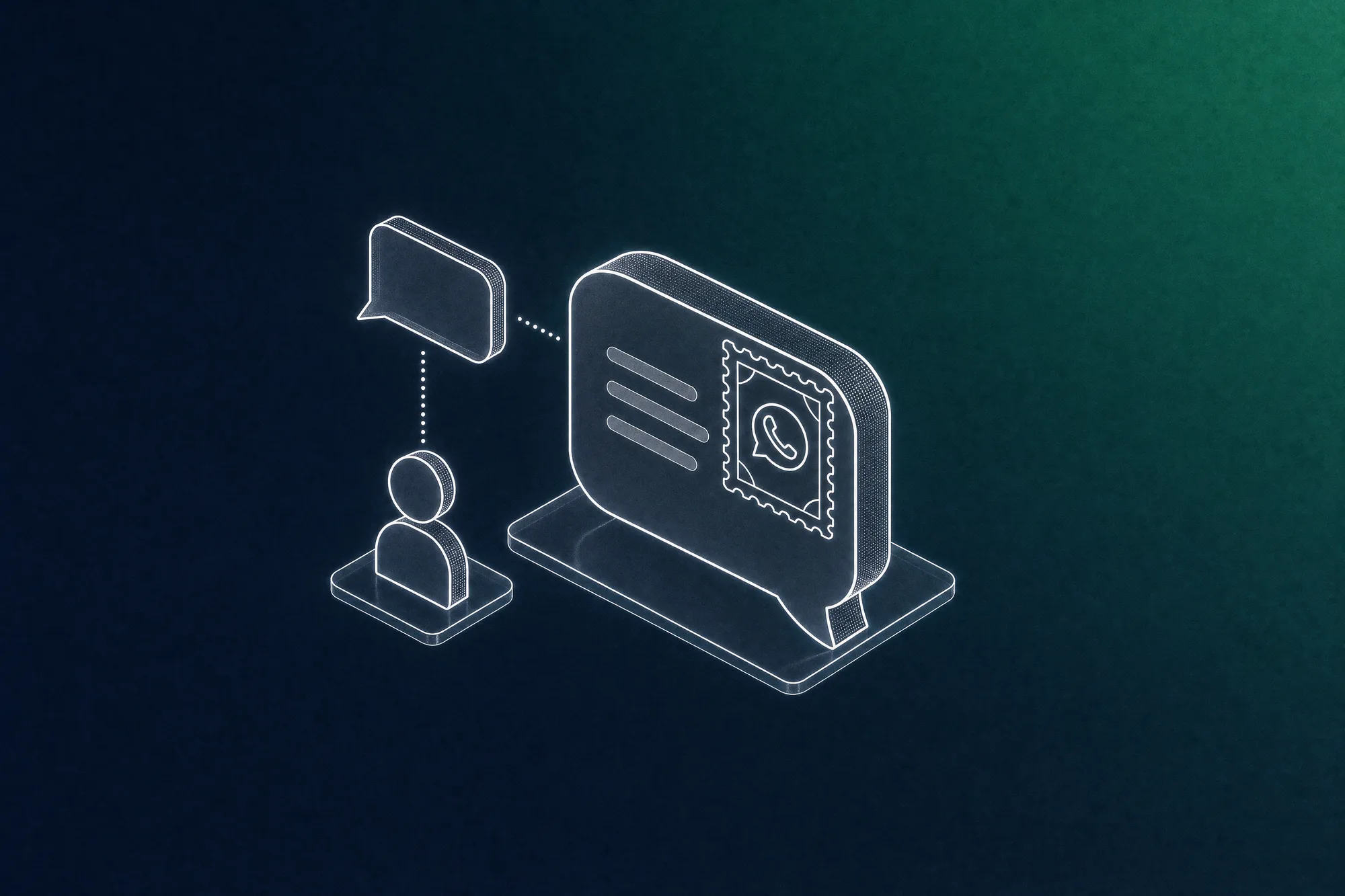
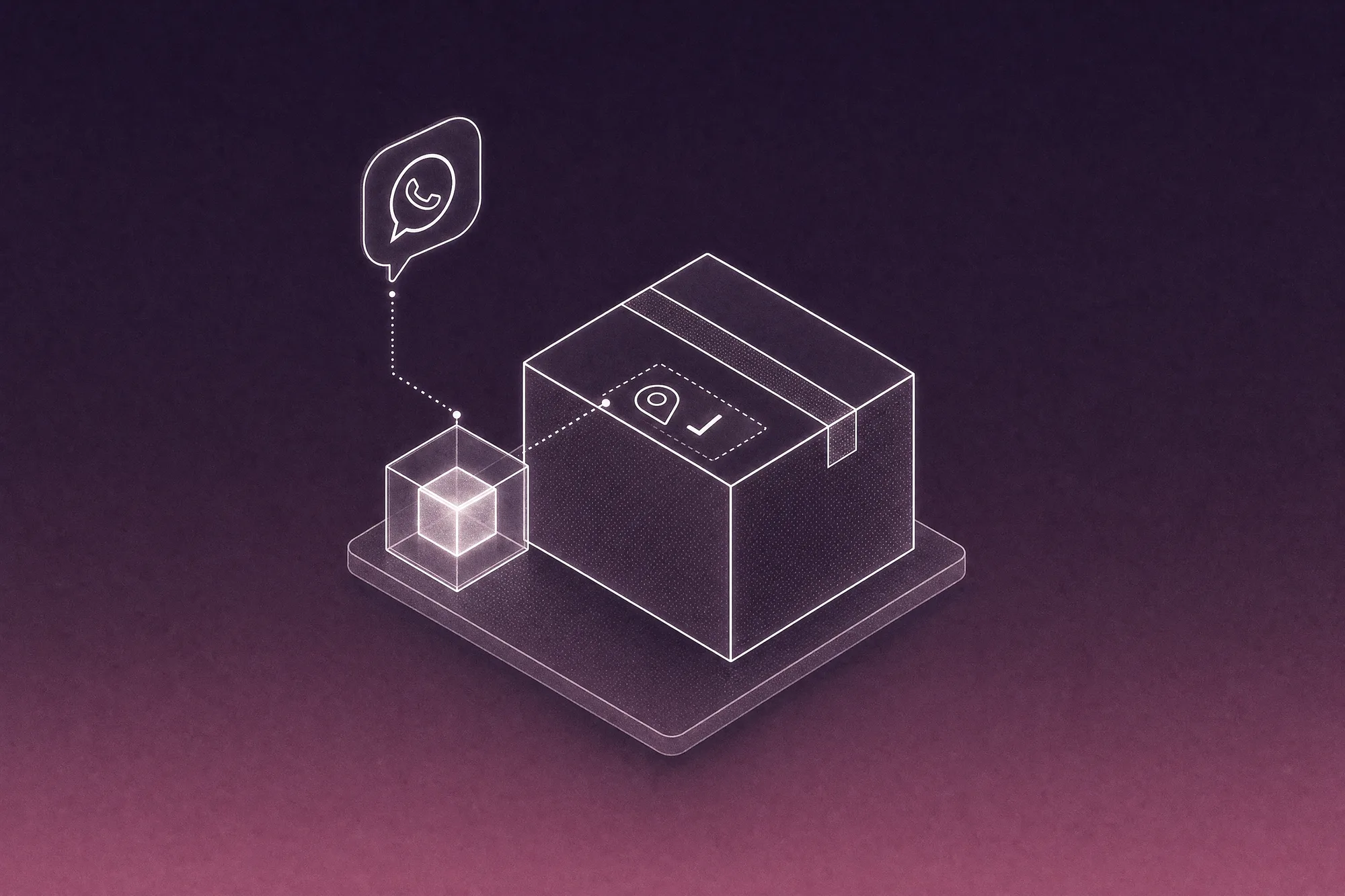
It is 8:15 in the evening. Your business WhatsApp is holding dozens of unread messages and the last admin went home two hours ago. Most of it is the same handful of questions: opening hours, shipping to Surabaya, whether you take cash on delivery. Mixed in are the ones that decide whether money moves tonight — an address to change before the parcel leaves the warehouse, a customer asking what they still owe, a complaint that the colour that arrived is the wrong one.
The difference that matters between a WhatsApp chatbot and an AI agent is not which one is smarter. A chatbot is finished the moment a reply goes out. An agent is finished only when a record in your system is right: the order exists, the address has changed, the invoice is out. Two systems can send the same sentence; only one has closed anything.
The question is narrower than it looks: which messages in your inbox need a system that can write into your own data. That answer is in the inbox, not in a vendor deck. WhatsApp is where everyone already is, used by 90.8% of Indonesian internet users aged 16 and over (Source: Databoks Katadata citing We Are Social, 2026). Take one busy hour from last week and sort every message into five buckets.
Owners are often surprised by their own tally: buckets two and three come out thicker than expected. In our retail and F&B chat projects in Indonesia the busy hours are bimodal, one surge before midday and another after 7 p.m., once the admin shift has ended. The evening surge is heaviest in bucket three, and usually gets answered the next morning.
Bucket one belongs to the chatbot, and there it is genuinely good. Most Indonesian businesses run two layers: the WhatsApp Business app's own greeting message, away message and quick replies, then a keyword menu bot of the one-for-the-catalogue, two-for-shipping kind. Both are cheap and legitimate for answers that never change. Neither can look anything up.
What earns an AI agent its keep is buckets two and three. Answering where is my order means reading that order in your database. Changing a delivery address means writing to it, and from there the outcome belongs to the system, not to whoever typed the reply.
Olaif Purchase shows what that looks like: a buyer uploads a purchase order, Claude AI extracts every line item, payment runs through QRIS, Virtual Account or an approved credit limit via Xendit, and the order syncs into Zoho Books as Sales Order, Invoice and Payment.
A third option arrived on 11 August 2026, when Meta brought Meta Business Agent to businesses across Indonesia, switched on from the WhatsApp Business app or wired into systems already running (Source: ANTARA, 2026). Its entry point is cheap for bucket one. Bucket three still needs a connection to your own data.
Bucket four does not move to a machine. Meta's Business Messaging Policy allows automation inside the 24-hour window but requires a prompt, clear and direct escalation path to a human, by agent transfer, phone or email (Source: WhatsApp Business, Business Messaging Policy, 2026). Bucket five needs only a filter rule.
For years the measure was deflection rate, how many conversations a bot held off before they reached a human. That works only while replies are free. From 1 October 2026 free-form replies inside the service window will be billed per message, including those an AI wrote (Source: Meta for Developers, 2026). Every round trip will then carry a price.
Swap that for turns to resolution. Take your last twenty conversations that ended in an outcome, count your replies, and average them. A menu bot that burns eight turns and still hands off to a human is slower than one that closes the order in three. From October it will also cost more. Redo the sum next month.
Kantar surveyed 11,056 adults across 22 markets including Indonesia for Meta. Agreement that an AI chatbot response is helpful ran at 67.7%, while only 42.9% believed AI would improve their experience (Source: Kantar for Meta, 2026). People accept AI in the moment it actually finishes something for them.
Sequence matters. Olaif Engage, the multi-agent engagement system we built for Olaif, handles thousands of comments and messages a month across five platforms: Instagram, TikTok, YouTube, Shopee and TikTok Shop. Eight specialist agents split the work: triage, influencer detection, brand-knowledge retrieval, drafting and quality review. Triage sorts each message by intent, sentiment, product line, language and urgency in under a second, then routes it to the right queue.
The part most often skipped comes last: every public reply passes a one-click human approval, accept, edit or escalate, and the system learns from each decision. Every step is logged: model, cost, latency, decision. Olaif Engage is not a WhatsApp system; what your inbox can borrow is the sequence: classify first, draft next, permission to write last.
Olaif appears as a named client with permission, and all sample data on the demo screens is fictional: every handle, name, comment, DM and review is invented, and every figure is illustrative.
Above Rp 500 million a month, this is a revenue decision and not only a service one. Indonesian e-commerce was worth Rp 1,288.93 trillion in 2024, and 84.21% of that moved outside marketplaces, through social media and messaging apps (Source: Databoks Katadata citing BPS Statistik E-Commerce 2024, 2025). Money changes hands inside the thread, which is why an inbox that answers without finishing quietly leaks revenue.
The cost side is honest arithmetic. Jakarta's 2026 minimum wage was set at Rp 5,729,876, up 6.17% on the previous year (Source: ANTARA, 2025), and that buys one shift, not an inbox that stays awake past midnight. The right system covers the hours that are hard to staff, while high-value decisions stay with your team.
Government Regulation 33/2026, the implementing rules for Indonesia's personal data protection law, takes effect on 16 January 2027 (Source: Katadata, 2026), so pick a system that can show where your customer data sits and who may see it.
If you want to see what that five-bucket split looks like in your own inbox, tell us about your process through our contact page. The Agentiq team replies with concrete recommendations, not a template. Our agents start at around Rp 2 million and custom apps from Rp 15 million, and you keep control over every reply that goes out.


Tell us what you need, and we will help turn it into a real application.
